

There are two tiers of plumbing fixtures in this country: retail vs. showroom. Plumbers and contractors have always known the difference. Most homeowners haven't.
The bathroom and plumbing industry is keeping a huge secret: the brand name on the box of a shower head or bathroom fixture tells you almost nothing about how it was built. The place it was purchased, on the other hand, tells you almost everything.
There are effectively two tiers of plumbing and fixture products in the U.S. market — retail and wholesale/showroom — and they are not the same quality. Retail is what you find at Home Depot, Lowe's, and on Amazon. Showroom products move through plumbing supply houses and kitchen-and-bath showrooms, sold mostly to contractors, designers, and custom builders.
Here's the mechanism that keeps those two worlds apart. The fixtures at big-box hardware stores are almost always exclusive to that store — made specifically for that retailer, and sold nowhere else. That's the whole point: if the exact product exists in only one place, there's no price shopping and no apples-to-apples comparison.
And it runs the other way too. Showroom products aren't sold at big-box stores, and honestly they couldn't be — the price points at retail are too tight for a better-made fixture to fit them.
People in the trade have understood the retail vs. showroom quality difference for decades. But most homeowners have no idea. So today, we're spilling this industry secret to help you get the best bathroom fixtures for your next upgrade.
FROM THE FOUNDER
Justin Ball, Founder of HammerHead®
Before I started HammerHead®, I spent three years as a regional sales manager for one of the largest faucet manufacturers in North America. I toured the plants, sat in on new product development, and talked strategy with the people running the company. I saw exactly how fixtures get built to a price point — and what gets quietly removed to hit it. That's the whole reason the HammerHead® brand exists. Because I believe consumers should have equal access to high-quality, performance-grade bathroom hardware that's built to last.
Why There Are Two Tiers in the First Place
The reason there's a difference in fixture quality comes down to purchasing power. Big-box retailers move staggering volume, and they use that leverage to compress profit margins on every brand that wants shelf space. If you're a manufacturer, hitting those price targets is the cost of getting in the door.
For the manufacturers, there's only one way to hit an aggressive price point without destroying your own margin: value-engineering the product. That means thinner walls, cheaper internals, and looser manufacturing tolerances. None of it is illegal, and none of it is a secret inside the industry. It's just good business under the constraints retail imposes — and it's invisible from the outside, because the finish still looks fine on the shelf.
Showroom and supply-house products don't operate under that constraint. It costs more (sometimes dramatically more) and in exchange it's built with better materials and tighter standards. That's the tier contractors and designers reach for when it actually matters.
Where the Quality Actually Diverges
If you research this quality difference online, it's not uncommon to see people debunking the claim as a myth. So let's be clear: if a fixture carries the exact same model number in both a retail store and a showroom, it is generally the exact same product. Running a separate production line costs a manufacturer money, so they don't do it for no reason. On that narrow point, the skeptics are right.
But that doesn't mean there's no real difference between retail and showroom fixtures. The divergence generally shows up in two ways, and both are easy to miss:
-
Store-specific models. Big-box chains frequently carry SKUs built specifically for them, engineered down to a price the supply house never has to meet. Same brand on the label, different guts inside. And because that SKU is exclusive to one chain, you won't even find it at a competing big-box store, let alone a plumbing supply house. Put simply, there's nothing to compare it against when you're shopping. That isn't an accident; it's how the big-box model is built on purpose.
-
The top tier simply isn't stocked. The better-built lines often aren't sold at big-box stores at all. You're not comparing a good version to a great one — the great one was never on the shelf.
The signs are clear once you know what to look for. Inferior valves and cartridges get swapped in where the premium version would keep it running leak-free for years. Plastic shows up throughout the fixture — not just hidden internal parts — where a better-built product uses metal. Anywhere water actually contacts the fixture has to be solid brass or stainless steel; zinc has real uses on handles, trim, and dry hardware, but it can't legitimately be used where water flows. And the fixture is noticeably lighter in the hand, because there's simply less real metal in it.
We go deeper on how to spot this contractor-grade quality in our companion guides: What "Built to Last" Actually Means in a Modern Home and Plastic vs Metal Shower Heads.
How to Tell Which Tier You're Holding
You don't need to take anything apart in the aisle. A few quick checks can tell you almost everything:
- Start with weight. It's the biggest clue. Real metal is heavy, so if a fixture feels light in your hand, that's your tell.
- Check what it's made of. Anywhere water actually touches the fixture — the body, the water pathway — has to be solid brass or stainless steel. Zinc isn't a legitimate option on water-contact parts, but it's a fine material for handles, trim, and other dry hardware, so its presence isn't automatically a red flag. On retail fixtures the shortcut usually shows up as plastic or metallic-look coating where the water actually flows.
- Look at the body. On a well-made fixture, the body is a single piece of metal — cast or machined as one solid unit. On a lower-tier product, it's two separate pieces joined together, usually with a visible seam where they meet. The one-piece version is stronger, looks cleaner, and is easier to keep clean because there's no seam for gunk to collect in.
- Don't over-read the cartridge. The cartridge is the small valve inside a faucet that controls water flow and temperature — and one of the first parts to fail over time. It can legitimately be brass, plastic, or ceramic, so the material alone isn't a reliable tell. The subtler issue is that even within the same brand, a cheaper cartridge sometimes gets swapped into the retail version instead of the premium one that keeps a faucet leak-free for years. You won't spot it on the shelf. You'll feel it later.
Why HammerHead® Skips This Game Entirely
HammerHead® was built to showroom standards from the start — solid brass and stainless steel, ceramic cartridges, no plastic pretending to be metal — and then sold directly to homeowners at retail pricing. The direct-to-consumer model is what makes this possible. Traditional retail distribution never could.
When you buy showroom products the old way, you're paying for the showroom floor and the distributor's markup on top of the fixture. Cut both of those out and the math changes. You're not getting a cheaper product to hit a price point — you're getting the product quality without the showroom prices.
There's another reason showroom products cost more, and it isn't just middlemen. Retail sells a small number of products in enormous volume, which drives per-unit prices way down. Showroom lines come in many more styles and finishes, produced in much smaller batches, so they never get those same volume discounts. The higher price reflects that smaller-batch reality on top of the better materials — not just markup.
And don't put too much faith in the warranty. In fashion plumbing, retail and wholesale warranties are usually identical, and retailers lean on that to make the value-engineered version feel like a safe bet.
But here's what that framing leaves out: when a fixture fails, paying a plumber to swap it out usually costs more than the fixture itself. Buying the right one up front is almost always cheaper than replacing the wrong one later.
Common Questions
Is plumbing from big-box hardware stores lower quality than from a plumbing supply house?
Not always, and the honest answer has nuance. If the model number is identical in both places, it's generally the same product. The real gap shows up with store-specific models built down to a retail price point, and with the higher tiers that big-box stores simply don't carry. It also helps to know that big-box products are usually exclusive to one chain, so the same model can't be found at a competing retailer or a supply house to compare against — that's by design. Judge the fixture by its weight, material, and construction rather than the brand name alone.
Do manufacturers make cheaper versions of fixtures for big-box stores?
Sometimes. It's common for major chains to carry models engineered specifically for them at a target price, which usually means thinner materials and more plastic throughout the fixture — inside and out — than the same brand's supply-house line. An identical model number, however, is generally the same product across channels.
How can I tell if a shower fixture is well built before I buy it?
Start with weight — that's the most reliable check anyone can do. Real metal is heavy; if a fixture feels light in your hand, that's your tell. Beyond weight, you won't be able to tell brass from stainless from zinc just by looking, so lean on what the packaging or product listing actually calls out for materials. You want solid brass or stainless steel named for any water-contact parts. Zinc is fine on handles and trim but can't legitimately be used where water flows. Also watch for chrome-plated plastic or metallic-look coatings pretending to be metal. Finally, look at the body — a single cast or machined piece with no visible seam is stronger and easier to keep clean than two pieces joined together. Cartridge material can legitimately vary, so don't hang your whole decision on that.
Why are showroom fixtures so much more expensive?
Part of it is better materials and manufacturing that's simply more precise — parts made to closer specs, which means they fit better, work more smoothly, and last longer. Part of it is the channel — you're paying for the showroom floor and a distributor markup on top of the product. And part of it is volume: retail sells a handful of models in enormous quantity, which drives per-unit prices down, while traditional showroom lines come in many more styles and finishes made in far smaller batches that never get those discounts.
HammerHead® works differently on both counts. We keep the catalog intentionally focused — timeless classics built to last, not fast-fashion styles chasing every trend — which lets us produce at meaningful volume even as a smaller brand. And by selling direct, we strip out the distributor and showroom markup. That's how we deliver showroom-grade quality at retail pricing.
Is HammerHead® sold in big-box hardware stores?
No. We sell direct through theshowerheadstore.com (and on Amazon). Skipping big-box retail is exactly what lets us hold to showroom standards without carrying showroom prices.
Stop Shopping to a Price Point
If you're tired of replacing fixtures that were only ever built to survive the warranty and not much longer, buy from the tier the pros actually use.
Explore the full collection of solid metal shower heads and complete shower systems, or read the HammerHead® story to see why we built the brand this way.
Want some specific recommendations? These are our top picks for new customers.
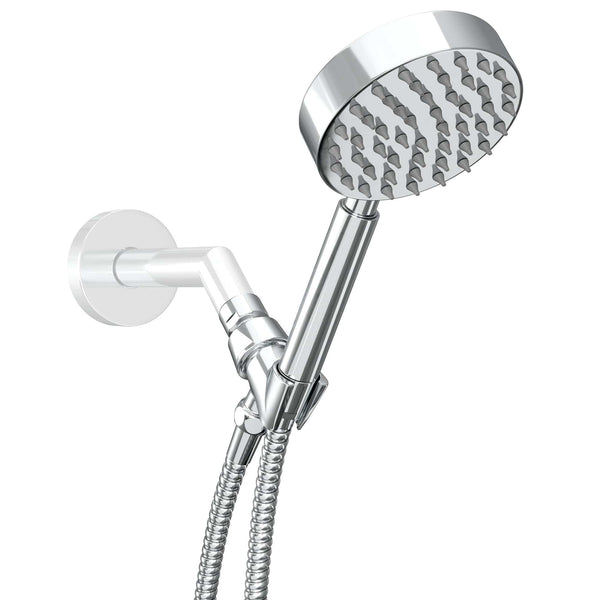
1-Spray Handheld Shower Head Set
Solid metal construction, precision nozzles, and a reinforced hose — the everyday workhorse and our most-reviewed head. Pick this if you want the single clearest upgrade over whatever came with the house.
SHOP THE 1-SPRAY HANDHELD →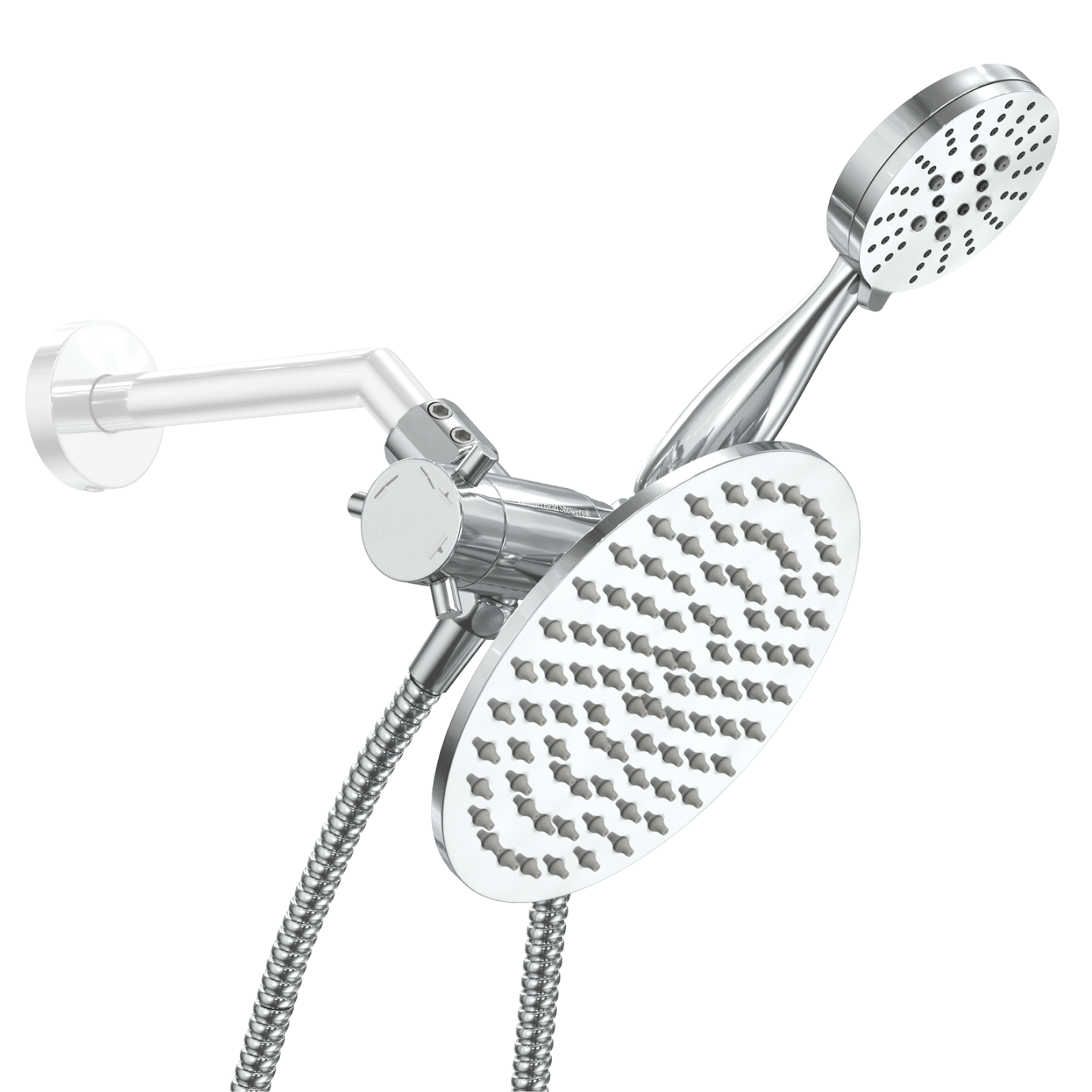
3-Spray Dual Shower Head Set
A fixed head and a handheld on one diverter, with wide, massage, and mist settings across the same solid-metal build. Pick this if you want the reach of a handheld and the coverage of an overhead without choosing between them.
SHOP THE 3-SPRAY DUAL →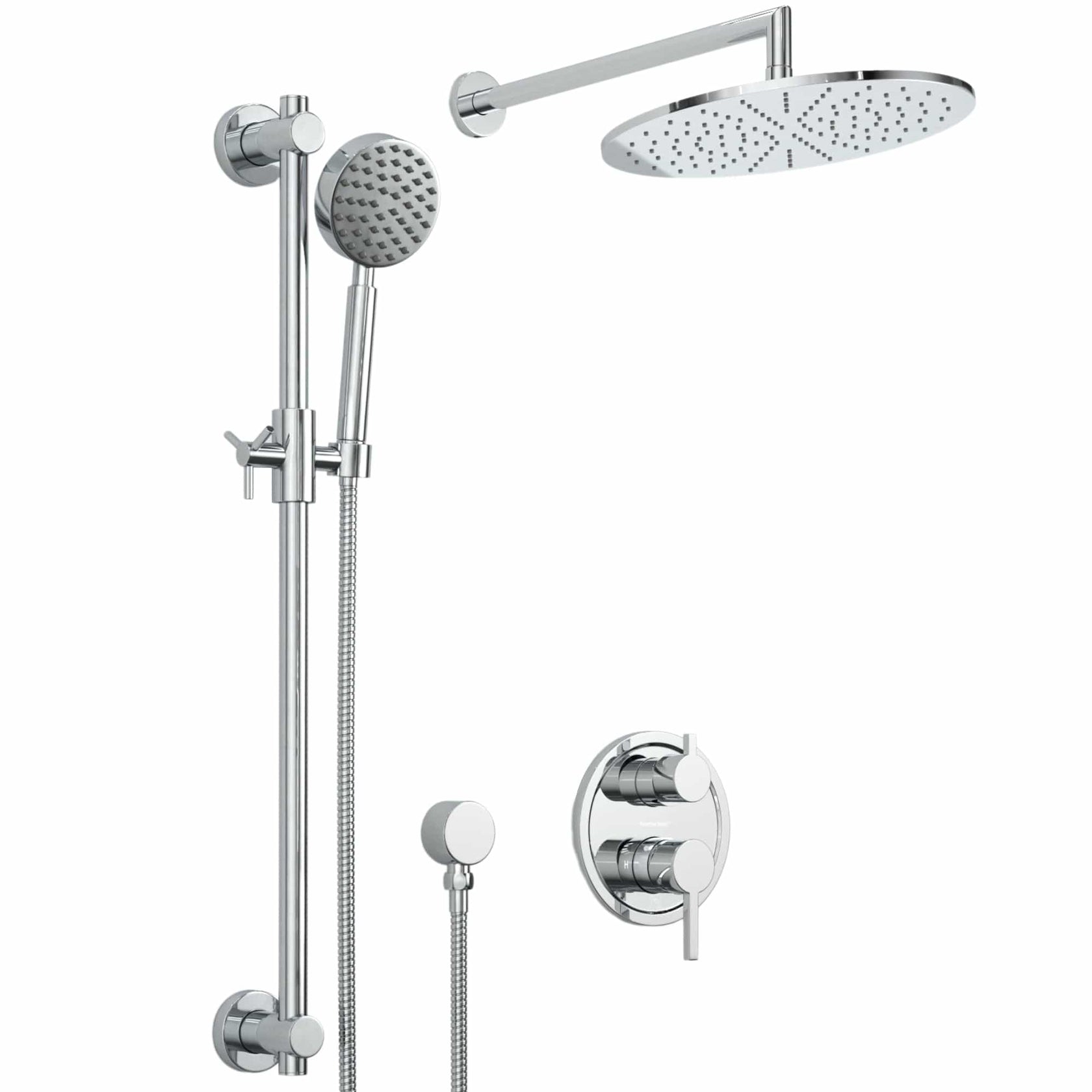
2-Handle Shower System (12ʺ Overhead Rain + Handheld)
A full remodel-ready system — a 12-inch overhead rain head, a handheld on a diverter, and a solid-metal two-handle valve engineered to run them together or on their own. Pick this if you're redoing the shower and want every part, including the ones behind the wall, held to the same standard as the ones you can see.
SHOP THE 2-HANDLE SYSTEM →Not sure what kind of shower fixture you need? Use our Shopping Assistant tool to explore our full range of shower heads, shower valves, shower systems and accessories.