

That slow, steady drip from a leaking shower head isn't just annoying — it's a sign that something isn't right.
If you're here wondering how to fix a leaky shower head, you’re in the right place. The good news: most shower head leaks come down to a few common, very fixable causes. The better news: you don't need a plumber to tackle most of them.
Before diving into a shower head fix, it's worth understanding what's actually causing the leak. Because a "leaking shower head" can actually be caused by three different problems, and two of them have nothing to do with the shower head itself.
Why Is My Shower Head Leaking?
There are three distinct reasons a shower head leaks. Diagnosing which one you're dealing with determines the fix (and whether the shower head itself is even the problem).
Reason 1: The Shower Valve Cartridge Is Failing (Not a Shower Head Problem)
→ How you know it’s this: the shower head drips while the water is completely off.
When a shower head drips even with the shower turned all the way off, the problem isn't the shower head — it's the cartridge inside the shower valve.
The cartridge is a small, replaceable component that lives inside the shower handle and controls on/off switching plus hot/cold mixing. When the cartridge wears out, water can sneak past its seal and dribble out of the shower head even when no one's using it.
How to Fix It:
The solution in this scenario is to replace the valve cartridge. This is rough plumbing, and for most homeowners, calling a licensed plumber is the right move. It's also important to locate the exact brand and model of your valve before ordering parts, because cartridges are not cross-compatible between brands or even between models of the same brand. If you're not sure what you have, a plumber can identify it quickly.
Reason 2: A Restricted Tub Spout Is Forcing Water to the Shower Head (Also Not a Shower Head Problem)
→ How you know it’s this: water comes out of the shower head when the tub faucet is running — and you never pulled the diverter up.
This one applies to anyone with a tub-and-shower combo, where a single valve feeds both a tub spout and a shower head. The tub spout has a pull-up diverter to redirect flow to the shower. When that spout isn't properly clearing the water — due to mineral buildup inside, an undersized spout, or a restriction in the line — water can't flow out fast enough. It finds the path of least resistance, which is back up the pipe behind the wall and out through the shower head above.
This looks like a leaking shower head, but it isn't. The shower head is fine. The tub spout is the problem.
How to Fix It:
Replace the tub spout. A properly-engineered, full-flow spout solves the pressure problem and, frankly, looks better than the chrome-plated plastic that most likely came with the house.
Our Top Pick: HammerHead® Tub Spout – Slip-Fit with Pull-Up Diverter


Reason 3: The Shower Head Connection Is the Problem (This One Actually Is About the Shower Head)
→ How you know it’s this: water drips at a connection point while the shower is running.
This is the scenario most people picture when they’re Googling “how to fix a leaking shower head.” The water is on, the leak is visible, and it's coming from one of these connection points:
A. Fixed Shower Head or Rain Shower Head: leaking at the swivel or threads where the head screws onto the shower arm
B. Handheld Shower Head: leaking where the head sits in its holder bracket

C. Shower Hose: leaking at connections with the shower head and/or wall outlet
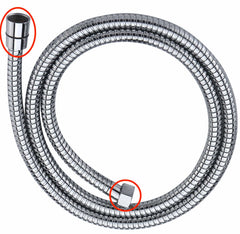

Thankfully, no matter where the shower head is leaking, the solution is the same six-step process we’re sharing below. With this guidance, most homeowners can fix a leaking shower head like a pro.
Why Trust HammerHead®?
At HammerHead®, we don’t just sell shower heads — we engineer them. Our products are built from solid metal, not plastic, and designed to last for decades. We’ve helped thousands of homeowners who were tired of leaks, drips, and constant replacements upgrade their showers. So we have firsthand insight into what actually causes shower hardware to fail.
When it comes to diagnosing a leaking shower head or understanding how valves and fittings should function, we’re not guessing. We design the components. We test the materials. And we know exactly where most shower systems break down — because we build ours to prevent it.
What You’ll Need to Fix a Leaking Shower Head
For most shower head connection repairs, you’ll need:
- Wrench or pliers
- Flathead screwdriver or paper clip
- Cloth (to protect threads and finishes)
- Thread seal tape
- Replacement shower washers (1/2” standard)
- White vinegar and water (for cleaning mineral buildup)
6 Steps to Fix a Leaking Shower Head
If you’ve determined that your leaking shower head is truly a problem with the head itself, then you can use these steps to fix the problem.
- Shut off the water at the shower valve. Don’t fight a running connection.
- Unscrew the shower head from the shower arm. You can usually do this by hand. If it’s stuck, use pliers or a wrench, but wrap the threads in a cloth first so the tools don’t chew up the finish. Turn counterclockwise to loosen.
- Inspect and clean. Peel off all the old thread seal tape from the shower arm threads. Wipe the arm down with a cloth. Look for cracks, stripped threads, or heavy corrosion. If anything looks compromised, that part needs to be replaced rather than resealed.
- Replace the washer. Reach inside the shower head’s threaded opening and find the small rubber washer. That washer creates the seal that stops the drip. Standard shower washers are 1/2” — available at any hardware store for a couple of dollars. Pry the old one out with a flathead screwdriver or paper clip, drop the new one in.
- Reapply thread seal tape. Wrap fresh thread seal tape around the shower arm threads — 4 to 5 wraps, going clockwise as you face the threads. The clockwise direction matters: when the shower head screws on (also clockwise), the tape tightens against the threads instead of unraveling. Press it down with your fingers so it adheres to the metal.
- Reattach and test. Screw the shower head back on by hand until snug, then give it one final small turn with the cloth-wrapped wrench. Turn the water on and watch for drips.
For handheld shower heads:
The same six steps apply, but the leak is often at a different connection, such as:
- Where the hose meets the wall outlet
- Where the hose meets the shower head
- Where the head sits in its holder
Apply the same process above to whichever connection is dripping.
What If My Shower Head Is Still Leaking?
If those steps didn’t solve your leaking shower head, that’s a good sign the affected part is ready for replacement. Here’s what to do next.
A. Contact the Manufacturer
Most reputable shower head manufacturers carry a warranty, which means you may be eligible to get the replacement part you need at no cost. Most warranties have a few standard criteria:
-
You are the original owner. Warranties typically don’t transfer. A receipt or order confirmation helps.
-
The issue is covered. A leak in the shower head itself generally falls under warranty. Normal wear and tear may not.
-
The product hasn’t been modified. If you’ve removed a flow restrictor or made other changes, the manufacturer may void the warranty.
-
You’re within the warranty period. HammerHead® carries a lifetime warranty. Other brands may offer 10 years, 5 years, or less.
B. Upgrade to a New Shower Head
Sometimes a repair just isn’t worth the time. If the shower head is old, made with plastic vs metal shower head parts, or has stripped threads, replacing it is the cleaner path forward. Upgrading to a solid metal construction means fewer leaks, longer life, and better performance from day one.
Our Picks: Replacement Shower Head Accessories
If your shower head itself isn’t the issue, a new shower accessory could be a low-cost way to fix the problem:
| Shower Arm & Flange | 72 Inch Shower Hose | Solid Metal Shower Head Holder |
 |
 |
 |
Our Picks: Best Replacement Shower Heads
Ready to completely replace your shower head? These are some of the best options on the market.
|
|
BEST HAND HELD SHOWER HEAD Solid Metal Hand Held Shower Head; 2.5 GPM, 1.75 GPM ✔ High Pressure ✔ Long, flexible hose ✔ ️Solid Brass Shower Head Holder |
|
|
BEST RAIN SHOWER HEAD Solid Metal Rain Shower Head; 2.5 GPM, 1.75 GPM ✔ Immersing, All Over Coverage ✔ Relaxing Rainfall Effect ✔ ️Multiple Mounting Options |
|
|
BEST DUAL SHOWER HEAD Solid Metal Dual Shower Head with 3-Spray Handheld, 2.5 GPM ✔ 2 Shower Heads, 1 Setup ✔ Relaxing Rain Effect AND Handheld Versatility ✔ ️4 Unique Sprays |
|
|
BEST COMPLETE SHOWER SYSTEM 2-Handle Shower System with 12" Overhead Rain & Handheld ✔ 2 Shower Heads, 1 Setup ✔ Relaxing Rain Effect AND Handheld Versatility with Adjustable Shower Arm ✔ ️2-Handle Shower Valve Included |


Stop the Drip…And Prevent the Next One
Fixing a leaking shower head is step one. Making sure it doesn’t come back is step two.
If your shower hardware is older, lightweight, or built with plastic internals, leaks tend to become a recurring theme. Upgrading to solid, well-engineered components isn’t about aesthetics - it’s about reliability.
When you’re ready to stop troubleshooting the same problem every year, explore the HammerHead® line of solid metal shower heads, valves, arms, and accessories. Built for homeowners who would rather fix it once than fix it often.